In October 2012, striking Kingfisher Airlines employees stood outside the company's Mumbai office holding a protest that had nothing to do with pay scales or work hours. A colleague's wife had just taken her own life, and her suicide note cited, explicitly, the financial stress of her husband's unpaid salary. At the exact same time, the man who owned the airline was still, by his own public reputation, one of India's most visible playboys, chairman of an IPL franchise, owner of a Formula One team, and possessor of one of the most expensive yachts in the world. Kingfisher Airlines did not run out of money quietly. It ran out of money in front of 4,000 employees, on camera, over eighteen months, while its founder kept flying the rest of his empire at cruising altitude. Ten years later, the extradition case is still open. This is what actually happened, in order.
Chapter 1How did an airline become a lifestyle brand before it became a business?
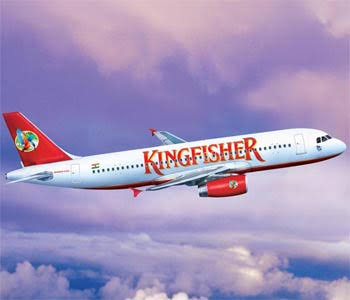
Vijay Mallya launched Kingfisher Airlines in 2005 already running one of India's most recognisable consumer empires, the UB Group, home to Kingfisher beer and United Spirits, at the time the third largest spirits company on earth. He brought the same instinct straight into aviation. Kingfisher positioned itself as India's first genuinely five star full service carrier, a brand new fleet, when most Indian carriers were flying aircraft well into their second decade of service, mood lighting, personal entertainment screens before that was standard anywhere in the country, and cabin crew styled more like a fashion campaign than an airline roster. It worked, at least as marketing. Kingfisher became the airline Indians aspired to fly, which is a genuinely impressive achievement for a five year old company competing against state owned incumbents. It also never once translated that aspiration into sustainable unit economics, because a five star product priced to compete with three star flag carriers is a subsidy, not a strategy, and someone always ends up paying for the difference eventually.
Chapter 2What was the one decision that actually broke it?
In 2008, Kingfisher acquired Air Deccan, India's pioneering low cost carrier, and merged the two businesses under one roof. On paper this looked like smart consolidation, a premium brand buying scale and domestic reach. In practice it was closer to a five star hotel merging with a hostel chain and trying to run both from the same reception desk. Air Deccan's entire identity was stripped price, no frills, and Kingfisher's entire identity was the opposite of that. The merged entity ran two completely different aircraft types, ATRs for the low cost routes and Airbus jets for the premium ones, two different cost structures, two different customer expectations, and one confused brand sitting on top of both, eventually rebranded Kingfisher Red for the low cost side, a name that satisfied nobody. The operational cost of running two airlines pretending to be one, combined with rising fuel prices and the interest bill on an aggressive, largely debt funded expansion, is where Kingfisher's cash actually started disappearing, years before most passengers noticed anything was wrong.
Chapter 3What did the collapse actually look like for the 4,000 people who worked there?
Brutal, drawn out, and extremely well documented, because the employees eventually had no option left but to make it public. The early warning signs surfaced as far back as November 2009, when roughly 100 pilots simply were not renewed after completing probation, a quiet way of cutting headcount without calling it a layoff. By late 2011, Kingfisher had started missing lease payments on its aircraft, then fuel bills, then, worst of all, salaries. What followed was not a single missed paycheque. It was a slow motion collapse spread across an entire year. Some staff went three months without pay. Then six. Then reports describe stretches of seven, eleven, and in the most extreme accounts, eighteen consecutive months.
By March 2012, pilots and staff refused to work entirely, since many had not been paid since the previous December, triggering mass flight cancellations. In April, employees threatened a full strike and demanded salaries be released within a day, and in a detail that captures exactly how personal this had become, staff wrote directly to Royal Challengers Bangalore, Mallya's own IPL team, asking the players to publicly distance themselves from him and boycott matches in solidarity. An open letter circulated from the airline's women employees to Mallya himself stated plainly that lower staff had been forced into slum housing as destitute, having exhausted savings and mortgaged property and gold just to survive the wait for wages already owed to them. Employees went on hunger strike. They filed criminal complaints with the police. They wrote to the Prime Minister's Office. And in October 2012, the news that actually stopped the country, a Kingfisher staffer's wife died by suicide, with her note explicitly naming the financial devastation of her husband's unpaid salary as the reason. Pilot Karthik Pattabiraman became the public face of a workforce that had run out of every other option.
Chapter 4So did the regulator actually do anything, or did this just drag on forever?
It ended the way these things usually end, late and administratively. On 20 October 2012, the Directorate General of Civil Aviation suspended Kingfisher's flying licence entirely, citing both safety concerns and financial non viability, and by December the licence was formally cancelled. Aircraft were repossessed by their lessors. Kingfisher's valuable slots at Mumbai and Delhi airports were redistributed, largely to IndiGo and SpiceJet, the two low cost carriers that would go on to dominate Indian aviation for the next decade using the exact pricing discipline Kingfisher had refused to adopt. Roughly 4,000 employees were left without jobs and, more importantly, without the wages they were still legally owed, some for well over a year of work already completed. In 2015, the SBI led consortium of 17 banks formally declared Kingfisher Airlines and Vijay Mallya a wilful defaulter, a specific Indian legal designation reserved for borrowers judged to have had the means to repay and chosen not to, rather than simply having failed commercially. The total default stood at roughly 9,000 crore rupees, and investigators alleged a meaningful share of that borrowed money had been diverted toward Mallya's other ventures and lifestyle rather than kept inside the airline it was lent to.
Chapter 5Where did Vijay Mallya actually go, and is this over yet?
He fled to the United Kingdom on 2 March 2016, and the decade since has been almost entirely legal manoeuvring rather than repayment. India revoked his passport, issued a non bailable warrant, and formally requested extradition through the CBI. UK courts approved that extradition in 2018, a ruling Mallya's lawyers immediately appealed, arguing in open court, memorably, this is not a Ponzi scheme, this is an airline, and that the original judge had mischaracterised Kingfisher's financial position. In 2019, India declared him a Fugitive Economic Offender under a law specifically built for cases exactly like this one, anyone facing an arrest warrant for an economic offence over 100 crore rupees who has left the country to avoid prosecution.
In July 2021, a UK court granted a bankruptcy order against Mallya, and he responded, characteristically, by mocking the banks on social media after IDBI Bank recovered its full 753 crore rupees, posting that enforcement authorities had already attached assets worth 14,000 crore rupees against a debt he claimed stood closer to 6,200 crore rupees, implying the recovery had already overshot what was owed. In 2025, Mallya lost his final bankruptcy appeal in the UK, closing off one of his last remaining legal avenues there. As recently as February 2026, the Bombay High Court gave him one final opportunity to return to India voluntarily, warning that continued absence could formally brand him as evading the judicial process and bar him from seeking any further relief from Indian courts while remaining abroad, while the central government told the court that UK extradition proceedings had reached a near conclusion stage. Near conclusion, a full decade after he left, is still not the same as concluded.
Chapter 6After ten years and 14,000 crore rupees in seized assets, did anyone who was actually owed money get paid?
This is the part of the story that should make anyone reading it genuinely angry, because the honest answer is almost nobody, and definitely not the people who needed it most. Indian authorities have attached and recovered assets exceeding 14,000 crore rupees from Mallya over the years, a figure larger than the original roughly 9,000 crore rupee default itself, once interest, penalties, and the broader scope of seized assets are included. That recovery has gone overwhelmingly toward the bank consortium that extended the original loans, institutions capable of writing off bad debt and absorbing the multi year wait through their own balance sheets. Former Kingfisher employees have had a dramatically worse experience of the same decade. A liquidator appointed by the Karnataka High Court took formal claims from former staff starting in 2019, and reporting from a decade after the airline's collapse found employees still waiting, still filing claims, still watching every fresh Mallya headline reopen a wound that had never actually closed with a payment. The banks eventually got most of their money back. The 4,000 people who kept showing up to work through eleven and eighteen unpaid months, some of whom lost their homes and, in at least one documented case, a family member, are still waiting for a system built to prioritise institutional creditors over the individual employees an institution actually ran on.
Chapter 7So what does an airline collapse actually teach anyone building something today?
Three things, and none of them are really about aviation. A premium brand built on a cost structure the market will not sustainably pay for is not a luxury strategy, it is a countdown, and Kingfisher's five star service on three star pricing power was always going to need either a price increase its customers would reject or a debt pile that eventually came due, and it chose the debt pile. A merger that combines two fundamentally incompatible business models to buy scale, Kingfisher's premium fleet swallowing Air Deccan's low cost one, usually destroys more value in operational confusion than the combined scale is worth, and the fact that Air Deccan's own no frills discipline might have actually saved Kingfisher had it been left alone, or had Kingfisher adopted it instead of diluting it, is the genuinely painful irony sitting underneath this entire story. And the legal designation wilful defaulter exists precisely because Indian regulators eventually recognised that not every corporate failure is an honest one, that the difference between a company that ran out of money and a company whose owner had other places that money could have gone matters enormously to the 4,000 people whose paycheques depended on knowing which one they were working for. Kingfisher's tagline was Fly The Good Times. A decade of unpaid salaries, one confirmed suicide, and an extradition case that still has not reached its own final chapter is the answer to whose good times it actually turned out to be.