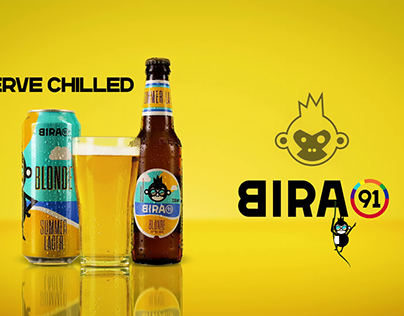
Yesterday, Ankur Jain signed away every share he owned in the company he built from a beer import side hustle into a 600 million dollar brand, released from his personal loan guarantees, and posted a LinkedIn note about needing "a clean balance sheet." Eleven years earlier, that same man convinced Sequoia Capital to make its first ever alcohol bet in India on the strength of a white bottle with a monkey on it. Both of those sentences are true, they are eleven years apart, and the distance between them is the entire lesson. Bira 91 did not fail because Indians stopped wanting a cooler beer. It failed because building a beloved brand and building a solvent company turned out to be two completely different jobs, and only one of them ever got done properly.
Chapter 1How did a man importing 30 beers nobody in India had heard of end up with a unicorn shaped hole in his balance sheet?
Ankur Jain moved to the US in 1998, finished a computer science degree at the Illinois Institute of Technology in 2002, and came back to India in 2007 with the kind of idea that sounds obvious only in hindsight. He started importing 20 to 30 international beer varieties nobody in India could buy, and spent the next several years quietly learning exactly what young, urban Indian drinkers actually wanted, lighter, wheat forward beers, at a price point they would not flinch at. That import operation, originally run under a company called Cerana Beverages, became B9 Beverages in 2012. By 2014 it was contract brewing in Belgium's Flanders region to lock in European quality before it ever touched an Indian production line. Bira 91 launched properly in 2015, and the branding decisions from day one were, credit where it is due, genuinely brilliant. White bottles that looked like nothing else on a liquor store shelf. A cartoon monkey mascot with more personality than most human owned brands manage. The tagline Imagined In India, aimed squarely at a generation bored of Kingfisher and ready to pay up for something that felt like a lifestyle choice rather than just a drink.
It worked, immediately and dramatically. Sequoia Capital led a 6 million dollar Series A in 2016, its first ever alcoholic beverage investment in India, backed by a genuinely starry angel list that included Snapdeal's Kunal Bahl and Rohit Bansal and Zomato's Deepinder Goyal. Sofina put in 50 million dollars in 2018. Japan's Kirin Holdings, one of the largest brewers on earth, bought in with 30 million dollars in 2021 as part of a 70 million dollar round that also pulled in 10 million dollars from MUFG Bank, pushing Bira's valuation to roughly 600 million dollars, a hair's breadth from unicorn status. Across 21 total funding rounds, Bira 91 raised 457 million dollars, more than any other funded competitor in the Indian beer space, according to Tracxn's company data. This was not a scrappy underdog story anymore. This was one of the best funded, best branded consumer companies India's startup ecosystem had produced.
So where did all that money and all that brand love actually go?
Into four breweries, built between 2015 and 2019, fast enough that the fixed costs of running them locked in well before demand had caught up to justify the capacity. That is the first thread that unravels everything else. A craft beer brand's whole premise is charging a premium for something that feels artisanal and limited. Bira's growth strategy, funded by hundreds of millions of venture dollars, was the opposite of artisanal. It was industrial scale expansion, and industrial scale expansion needs industrial scale, reliably growing revenue to service it. When competitors started undercutting on price, Bira had a choice between protecting its margins or protecting its market share, and by the look of the FY24 numbers, it tried to do both and achieved neither.
The FY24 numbers, the year ending March 2024, are worth sitting with slowly because they do not read like a company having a rough patch. They read like a company in genuine freefall. Revenue fell 22% year on year to 638 crore rupees. Net loss for the same year came in at 748 crore rupees, meaning Bira 91 lost more money than it made in total sales, a loss to revenue ratio north of 100%. Total debt stood at roughly 1,000 crore rupees. When the FY24 audit was finally made public in October 2025, it revealed something even starker sitting underneath the annual loss, the company's entire net worth had been wiped out, with liabilities exceeding assets by 619.6 crore rupees, alongside a negative operating cash flow of 84 crore rupees and cumulative losses that had climbed to 1,904 crore rupees.
What actually lit the fuse, and how absurd was it?
What did the people actually working there find out was happening to their own paycheques?
This is the part of the story that turns a financial case study into a genuine governance scandal, and it is where investor patience finally ran out. Employees say salary payments started slipping from around November 2024, and by October 2025 arrears had piled up to nearly 50 crore rupees, unpaid for more than six months in some cases, alongside unreimbursed expenses and, more seriously, alleged violations in provident fund contributions, the retirement savings deductions Indian employers are legally required to deposit on their staff's behalf. Vendors stopped getting paid too, triggering creditor lawsuits. In October 2025, more than 250 Bira 91 employees signed a petition addressed directly to the board and to the company's biggest institutional backers, Kirin Holdings and Peak XV Partners, demanding Ankur Jain's removal as founder and CEO, citing corporate governance failures, a lack of transparency, and the prolonged, unresolved delays in salaries and statutory dues. Two hundred and fifty employees is not a disgruntled minority inside a company that, by that point, had already shrunk dramatically. Bira's headcount fell from over 700 to just 260 employees by late 2025, a 63% reduction, even as the company scraped together a 100 crore rupee rights issue simply to keep the lights on.
Why did it take nearly two years for the investors who put in 457 million dollars to actually do anything about it?
Because getting rid of a founder who still controls meaningful equity and sits on the board is legally and politically messier than firing a bad employee, and this is worth understanding as its own lesson in startup governance. Even after Kirin Holdings, the single largest shareholder at 20.1%, began actively exploring an exit from its own investment in November 2025, and even after Peak XV Partners, holding 14.6%, joined the push for Jain's removal, the dispute dragged on because Jain still held a real 17.8% stake and, crucially, personal guarantees on company loans that made any clean removal legally complicated for everyone involved, not just for him. The eventual settlement, signed and announced on 21 to 22 July 2026, needed to satisfy close to 30 separate stakeholders, according to Jain's own account, before anyone could actually move forward. The terms were a straightforward trade. Jain walked away from the board, from his executive role, and surrendered the entire 17.8% stake his family had built over eleven years, in exchange for being released from the personal loan guarantees that had made him personally liable for a chunk of B9's roughly 1,000 crore rupee debt pile, plus a full withdrawal of the litigation that had been running between all sides. Bira 91 also quietly lost control of The Beer Cafe, a related retail business, somewhere in the middle of this unwind, one more asset that did not survive the restructuring.
So what does this actually teach anyone building a brand, not just a beer company?
Three lessons, and the first is the one most founders get backwards. Brand and unit economics are not the same project, and winning one does not buy you time on the other. Bira 91's branding was, by any honest measure, one of the more genuinely creative pieces of Indian consumer marketing in the last decade, a monkey mascot and a white bottle turned an entire generation of drinkers away from Kingfisher, and that is a real, difficult achievement most consumer startups never manage at all. None of that brand equity showed up as a defensible moat once competitors realised they could undercut Bira on price without needing to match its marketing budget, because the thing customers were actually loyal to was a feeling, not a supply chain, and feelings do not protect gross margins.
The second lesson sits inside the excise re-registration disaster specifically. Operational and regulatory risk in a heavily licensed industry like alcohol is not a background detail to be handled by the legal team while the growth team focuses on the brand. It is core strategy, and a company that treats a legal entity name change as paperwork in a state by state licensed industry is one bureaucratic delay away from starving its own sales pipeline for the better part of a year, exactly as happened here.
The third lesson is about founders and control, and it is the least comfortable one. Ankur Jain built something genuinely remarkable and then, by his own investors' and employees' account, held onto operational control for roughly two years after the numbers had already made clear that a change was needed, a stretch long enough for 250 employees to feel they had no better option than a public petition and for the company's own net worth to fully erode while the argument over who should fix it continued. Kirin Holdings, Peak XV Partners, and Sofina are not inexperienced investors. Their multi year struggle to force a resolution here is a reminder that even the best governed venture rounds, on paper, can take years to translate a board seat into an actual course correction once a founder is unwilling to leave voluntarily.
Chapter 7So, brilliant brand or cautionary tale?
Both, at the same time, which is the actually useful way to read this rather than picking a side. Bira 91 proved something genuinely important about the Indian consumer market, that a homegrown brand with real creative confidence could take share from decades old incumbents and get international investors to write real cheques doing it. It also proved, in exhaustive, audited, now publicly available detail, that a beloved brand sitting on top of four expensive breweries, a state by state regulatory minefield, and a founder unwilling to hand over the wheel is not a company. It is a marketing case study waiting for its balance sheet to catch up with reality, and after eleven years, 457 million dollars, and a stake surrendered down to zero, reality finally did.